Measuring What Matters: The $375 Million Blind Spot in Australian Beef
“Australia led the world in eating quality because the industry chose to. We can lead the world again in yield, for the same reason. The tools are in our hands; but the decision is ours to make and support.”
What if the Australian beef industry is potentially leaving $375 million a year on the table, hidden inside carcases that nobody is measuring. A new Nuffield Australia report puts a dollar figure on one of the industry's biggest blind spots: beef carcase yield.
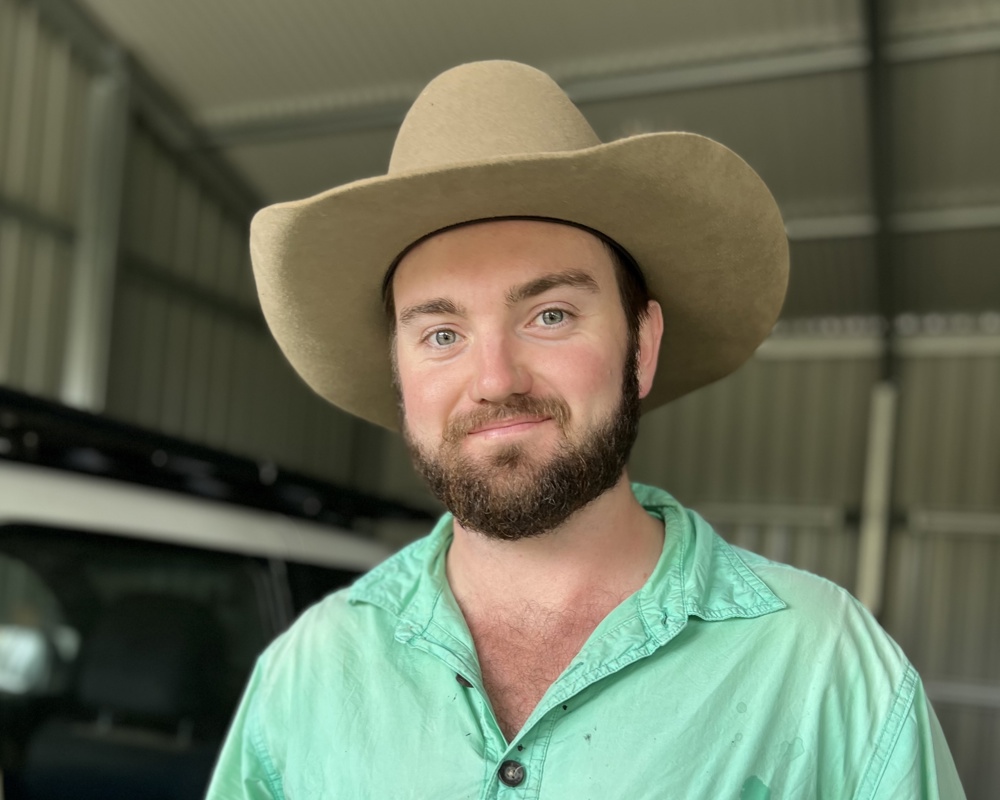
James Carter, 2025 Nuffield Scholar and Processing Manager with the Australian Agricultural Company (AACo), spent his Scholarship investigating why Australia, a world leader in beef eating quality, has never properly measured or paid for carcase yield. Supported by Northern Pastoral (AACo, Consolidated Pastoral Company, Elders and S. Kidman and Co), James travelled through Australia, New Zealand, Singapore, Taiwan, Zimbabwe, Chile, and vastly across Europe and the UK to study how other countries measure and reward it.
“I have spent my career watching the work that goes into raising an animal, from the land my family has farmed for seven generations, through to the boning rooms I help manage today,” James says. “The idea that hundreds of dollars in value can be created or lost on each carcase, yet remain hidden because it is neither measured, rewarded nor fed back to the producer, is the gap I want to help close.”
His report, Measuring What Matters, is built on published scientific research and a bone-out trial James ran with Murdoch University. Seventeen carcase sides of different carcase weights and objectively measured fat depths were dissected down to the gram. The result: when measured at identical carcase weight, the leanest and fattest sides differed in value by as much as $300 per side, a $600 per head swing that carcase weight alone could simply not see, and invisible to the way Australia currently grades, measures and pays for beef.
The measurement technology to address this already exists. In trials, DEXA scanning has explained 89% of the variation in lean percentage, 95% in fat percentage and 87% in bone percentage, all in under a second per carcase, surface-imaging cameras are adopted across Europe offering a cheaper and faster entry point, and microwave if space and costs are prohibitive. No matter which technology/s industry wishes to adopt, the reference standard must be aligned to computed tomography (CT). What's missing, James argues, is the industry architecture: an accredited yield trait in the AUS-MEAT trading language, a payment grid that rewards it, breeding values producers can chase, and a transparent feedback system connecting the boning room back to the paddock.
It's already working in pockets. Globally from the Irish Cattle Breeding Federation (ICBF) feedback system, with a national herd breed plan through genotyping every animal, that helps producers make better genetic selection to target the top of the objective processor grid they are paid on. To domestically Gundagai Meat Processors' in-house GLQ5+ grade that rewards producers with a bonus for lamb carcases that hit the mark on yield and eating quality, proof the model works when the right feedback and incentives are in place.
“The technology is the easy part,” James says. “The collaboration is the hard part, and it is this part that will determine whether this becomes paradigm shifting or just another good idea.”
James's call to action is direct: the technology is available, the science is settled, and the gold-standard reference methods exist, the only thing missing is the architecture and will to act. Processors should start installing yield technology now. Industry should anchor every device to a national CT reference standard and get a yield trait onto the AUS-MEAT trading language. Feedback and payment then need to follow the carcase back to the producer, regardless of whether it was sold over the hooks, through a saleyard, or out of a feedlot. Incentivising producers to make better genetic selection based off what the processor deems as the market wants will result in more carcases arriving at the boning room in that spec, and to a higher yield that the customer pays for. The key to all of this being truly transformative is rewarding producers through objective feedback they can action and is how industry truly starts extracting the full value of the carcase for quality and quantity.
James's full report,Measuring What Matters, is available on the Nuffield Australia website. He will present his findings at the 2026 Nuffield National Conference in Darwin this September.
Registrations for the 2026 Nuffield National Conference in Darwin are open now. Book your seat: https://www.nuffield.com.au/conference/2026-conference/registration