Is Money Really the Issue? Why a Northern Cattle Job Is Worth More Than the Payslip Shows
“The Northern Cattle Industry must offer more than employment; it must offer a future.”
From a vineyard in France to a feedlot in Canada, Queensland cattleman Nick Krebs kept hearing the same answer when he asked producers about their biggest business risk: finding people. With the median age of Australian agricultural workers sitting at 50, it is a problem the Northern Cattle Industry can’t afford to ignore.
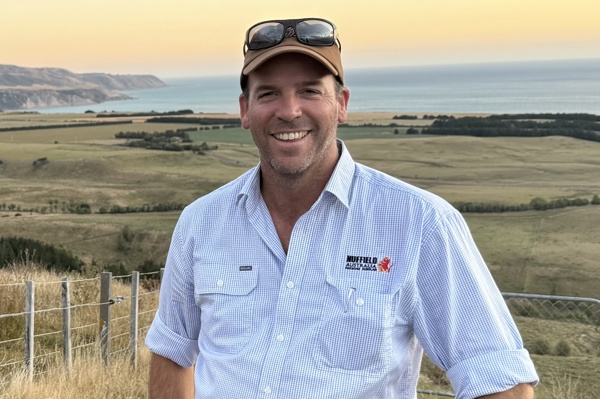
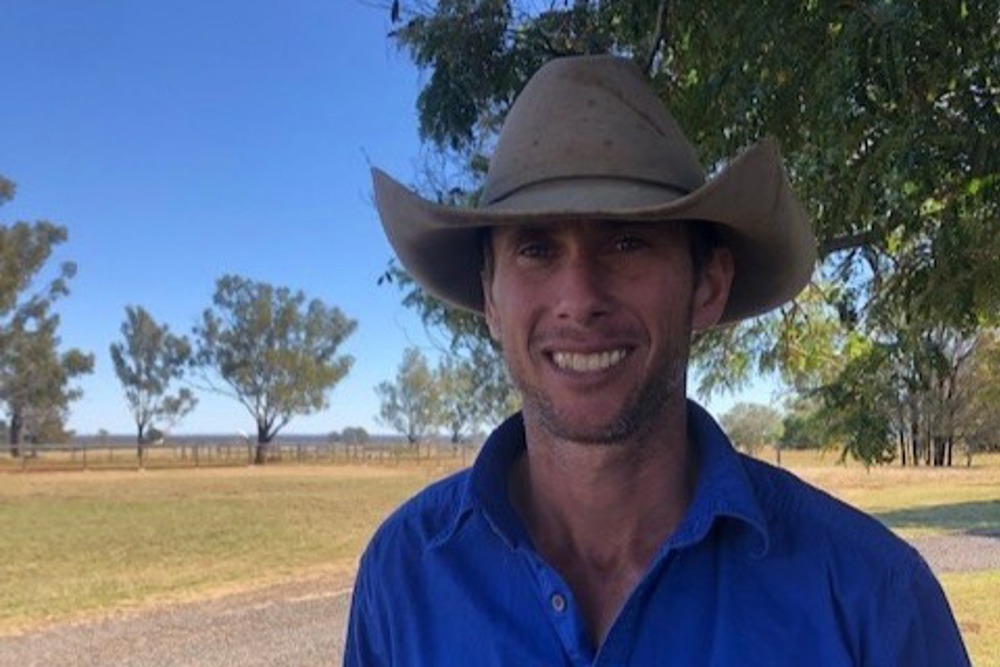
Nick Krebs, a 2020 Nuffield Scholar from Alton Downs, Queensland, supported by Meat and Livestock Australia (MLA), has spent 22 years in the Northern Cattle Industry. He has worked his way from entry-level station hand to helicopter pilot, station manager and now Chief Executive Officer of Woorabinda Pastoral Company.
His research took him to Singapore, France, the UK, Canada and the USA, as well as across Queensland, New South Wales and Victoria, to find out what is working to bring people into agriculture and keep them there.
“It was while travelling through France, when I asked wine producer Fabien Demois about risks to his business and he replied ‘biggest risk to business is to find workers’, that I realised how significant the problem of finding people is,” Nick says.
Nick’s report takes on the long-held view that cattle work doesn’t pay. A starting worker under the Pastoral Award earns $859.30 a week. But where food and accommodation are supplied, as they commonly are on northern stations, Nick calculates that worker is better off by another $342 a week, or $17,784 a year.
The gap is bigger again in management. Many northern stations pay managers between $100,000 and $180,000, often with a vehicle, food, housing, boarding school contributions and power for the family. Add housing and groceries to a $140,000 salary and the package comes to $179,364 a year, almost twice the Australian average adult weekly earnings.
“Taking this into consideration, is money the issue? For most it is the lack of understanding and awareness of the real value of food and accommodation commonly supplied to employees throughout the Northern Cattle Industry,” Nick says.
In Montana, Nick saw what retention looks like when it is built around the person. Ranch hands in the USA commonly stay on one ranch for six to 18 years, compared with under three years for a station hand in Australia. At Redland Red Angus, ranch hand Chad Finke has worked with the Redland family for nearly 20 years, with family accommodation and access to yards and facilities to run his own American Quarter Horse stud alongside his job.
Bob Redland told Nick that if his ranch hand left, he would “have a hundred cowboys waiting to start. Everyone wants to be a cowboy”.
Nick’s message to industry is practical. Put a real dollar value on food, accommodation and extra leave and tell recruits, parents and schools about it. Map out clear career pathways and invest in training. Offer low-cost incentives, like letting staff run a few cattle or horses of their own, that give people a stake in the business. And work with schools, government and training providers so young people see the industry as a career, not just a gap year.
“Is it time a business looks at its operations and changes to suit the people instead of needing to find people to suit the business?” Nick says.
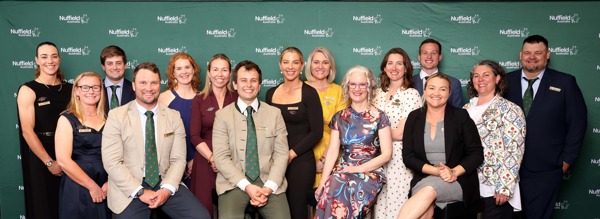
Nick’s full report, Enhancing Attraction and Retention in the Northern Cattle Industry, is available on the Nuffield Australia website. He presented his research at the 2023 Nuffield National Conference in Perth.