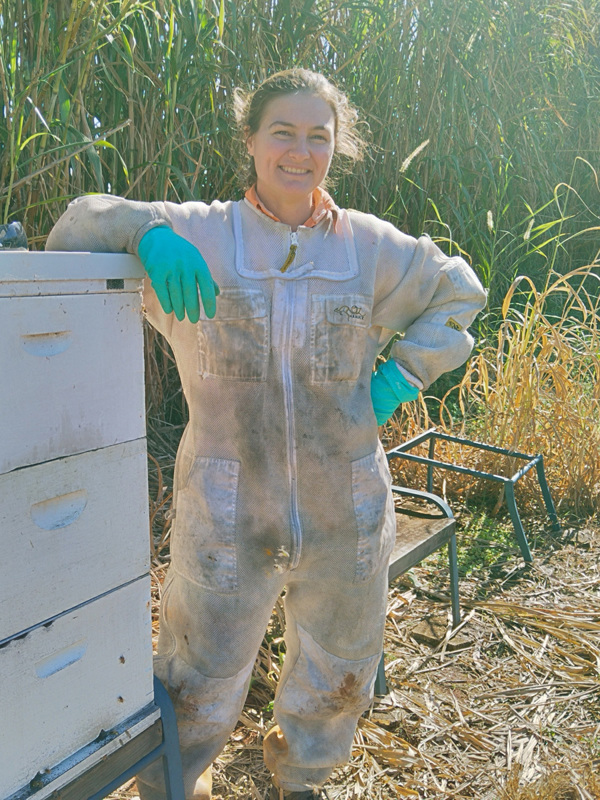
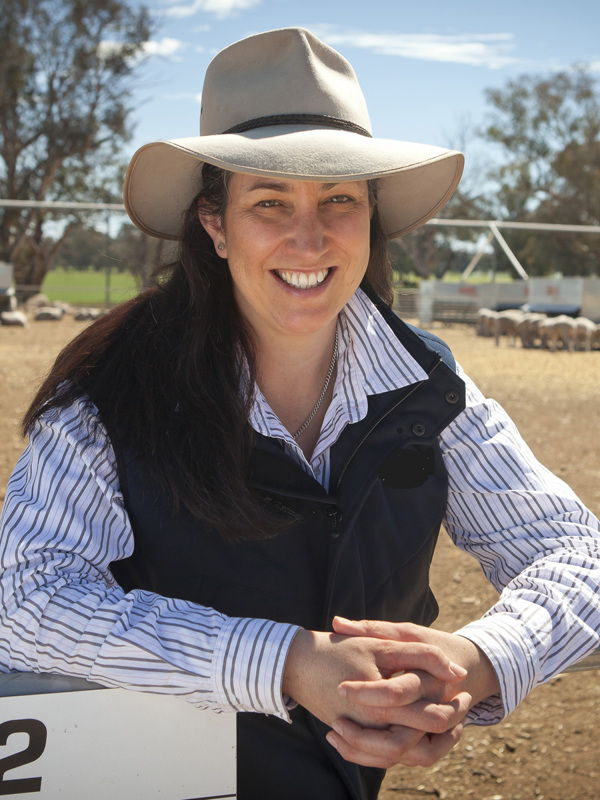
Tessa Dimond

A St George agronomist has criss-crossed the globe to uncover insights critical for Australian grain growers to maintain their market access amidst demanding international standards.
Tessa Dimond, a 2023 Nuffield Scholar supported by GrainCorp, conducted an extensive study into the complexities of Maximum Residue Limits (MRLs) for agricultural chemicals and their impact on Australian grain exports. Tessa's research explored the best practices and challenges faced by grain producers worldwide.
"The Australian grain industry is vital to our national economy, with 60-70% of our production aimed at export markets," Tessa explains. "Navigating the complexities of MRLs is crucial to maintaining these international markets, especially with the EU's aggressive stance on reducing pesticide usage by 2030."
Tessa's journey took her to Canada, New Zealand, Chile, Argentina, Ireland, France, Poland, the Netherlands, Italy, Switzerland, and the United Kingdom. In these countries she examined how different regions manage MRLs and their impact on trade. A significant focus was on the European Union’s (EU) standards and how Australian growers can align their practices to avoid trade disruptions.
"The challenge lies in balancing Australia’s risk-based MRL framework with the hazard-based approach of other countries," Tessa notes. "Our industry must continue to prioritise sustainable farming practices and innovative technologies to meet these standards."
Tessa's research highlights the importance of precision agriculture and Integrated Pest Management (IPM) in reducing chemical residues and enhancing sustainability. She emphasises the need for effective communication and traceability throughout the supply chain, ensuring that bulk handlers play a significant role in maintaining grain quality and compliance with MRLs.
"Major companies like Kellogg's and Nestlé are setting goals to reduce pesticide usage in their supply chains. Australian growers must adapt to these evolving demands while maintaining efficient food production," Tessa says.
Her report underscores the industry's commitment to aligning with global sustainability movements, such as the United Nations' Sustainable Development Goals. Common agricultural practices in the Australian grains industry like minimal tillage, crop rotations, and variable rate application are essential to improve soil health and biodiversity, and help the industry meet diverse international standards.
Tessa's findings also highlight the critical role of the National Residue Survey (NRS) in supporting the Australian grain industry by providing independent testing and insights to reduce export risks. "The NRS helps us understand how to manage residues better and keep our reputation for high-quality, clean grain intact," she says.
Tessa's full report is now available on the Nuffield Australia website.
Investor Information:
GrainCorp is an integrated grain and edible oils business with a market leading presence in East Coast Australia (ECA). It is the largest grain storage and handling business in ECA and the number one edible oil processor and oilseed crusher in Australia and New Zealand.
Over its 100+ year history, GrainCorp has created a global supply chain with high quality infrastructure assets that store, process and facilitate the transportation of grains and edible oils.
Facebook: @GrainCorpLimited
Twitter: @GrainCorp
Website: www.graincorp.com.au