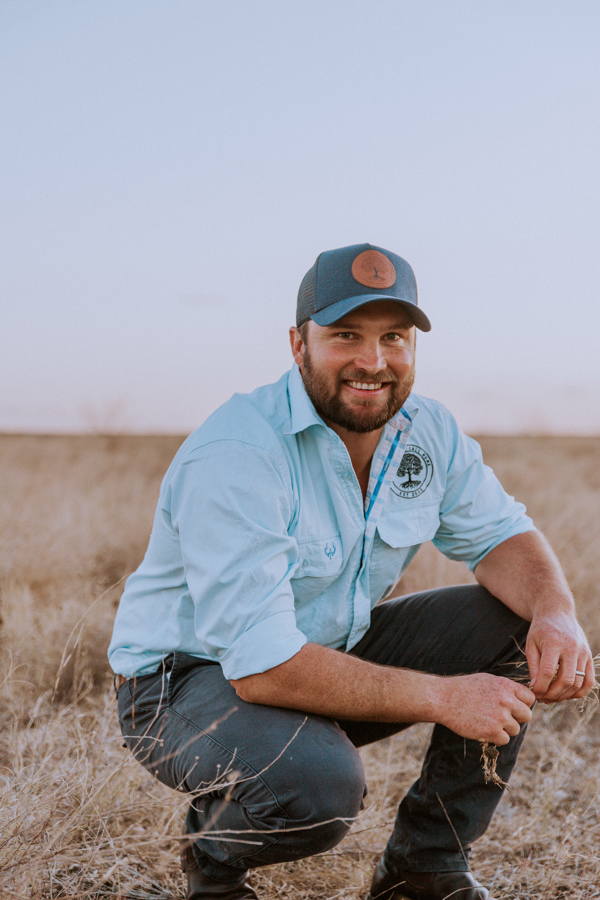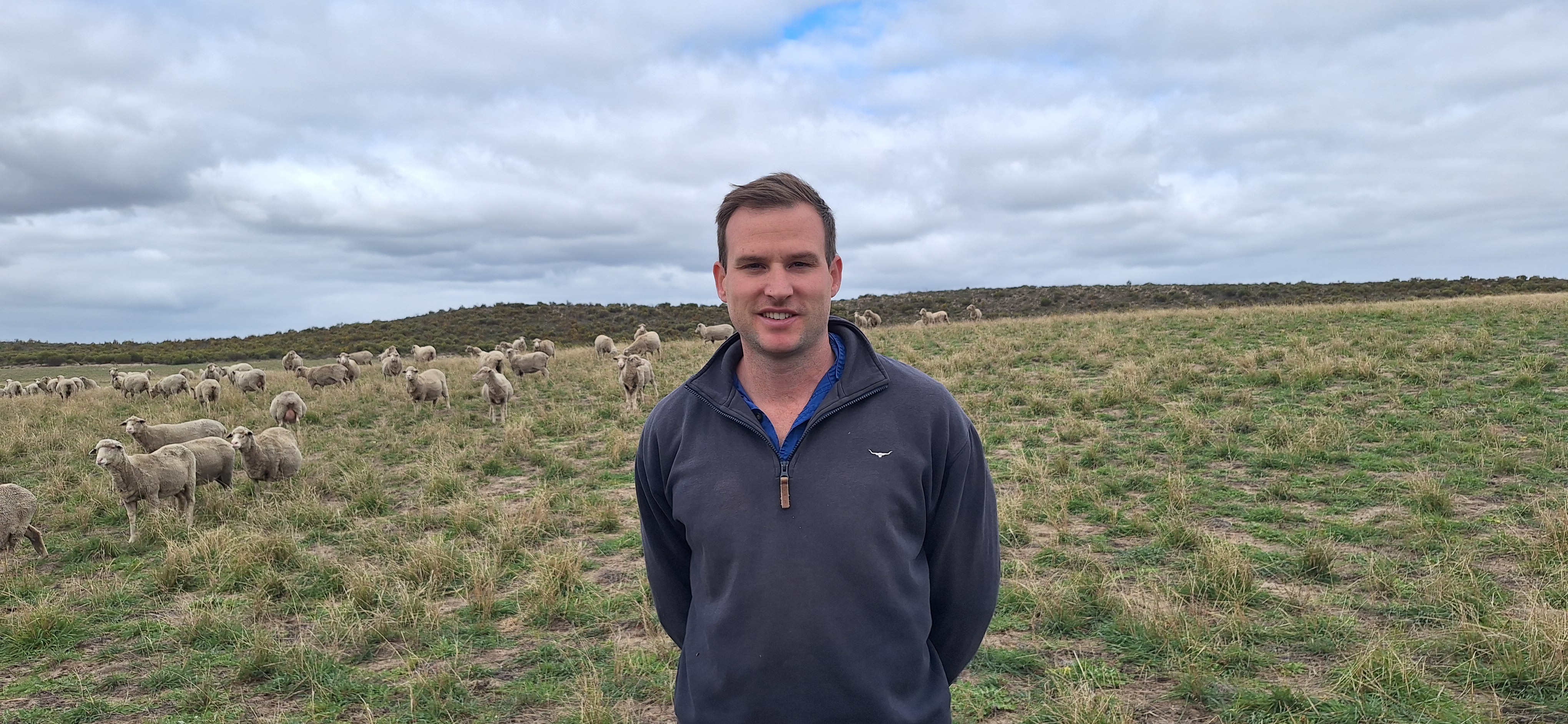
Angus Smith
Recovery from drought more than just grass in the paddock
South Australian sheep producer Angus Smith may have grass in his paddocks, but two years of drought have taken their toll on both stock numbers and finances.
With a now depleted Merino flock, given the need to lighten numbers, Angus wants to ensure any money reinvested in the recovery is going to give the best bang for buck. That’s especially relevant for his own situation where he and his wife bought his Carcuma farm in 2019 (after he initially purchased the property in 2013 with his father and brother). After more than a decade working in the Northern Territory Police Force they moved onto the property where they have experienced challenges including interest rate rises, low wool and lamb prices, and drought.
His research, “How do the best livestock businesses successfully recover from drought?”, will look at the ways enterprises rally after a financial shock. His studies will include businesses outside agriculture, to determine their recovery strategies, across the United States, Europe and Africa.
He is interested in younger and smaller businesses like his own, where drought can have a disproportionate effect on profitability. Yet he is aiming to find commonalities between businesses that have successfully recovered and grown on the back of financial shocks, that can be applied to a range of agricultural businesses regardless of size or enterprise.
While droughts are an inevitable part of farming in Australia, Angus is keen to find the best way to manage an enterprise to bounce back when the season turns for the better, and for businesses to be more prepared for the recovery.
Investor Information:
The Australian Government’s Future Drought Fund provides secure, continuous funding for drought and climate resilience initiatives. It is helping Australian farmers and communities prepare for the impacts of drought. Through the Drought Resilience Scholarship program, the Future Drought Fund has supported five 2027 scholarships.