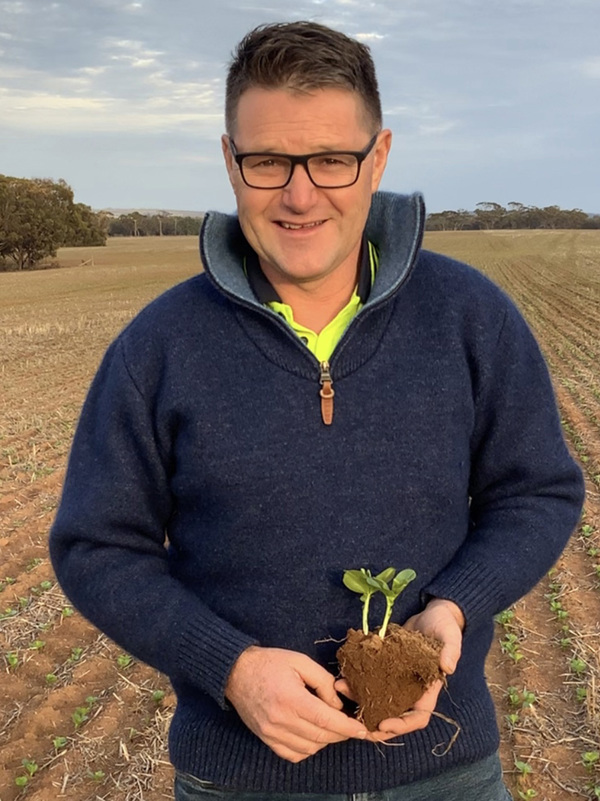
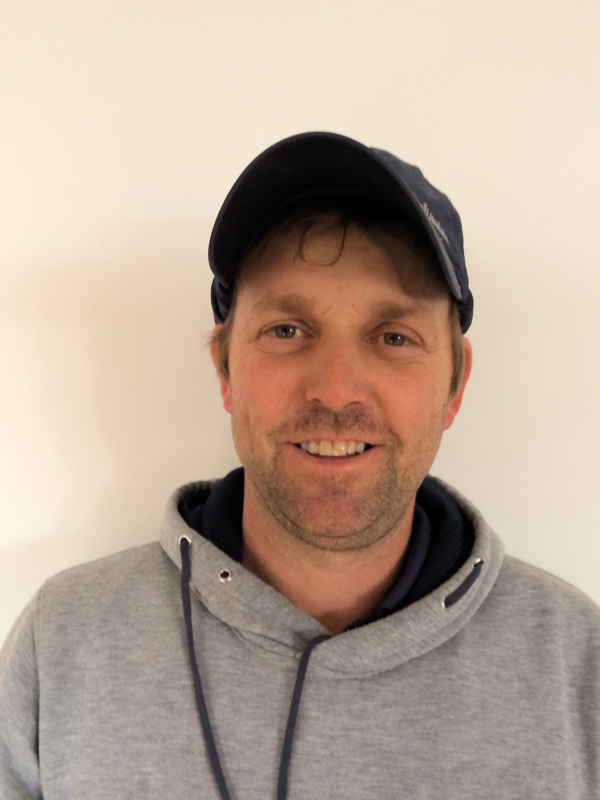
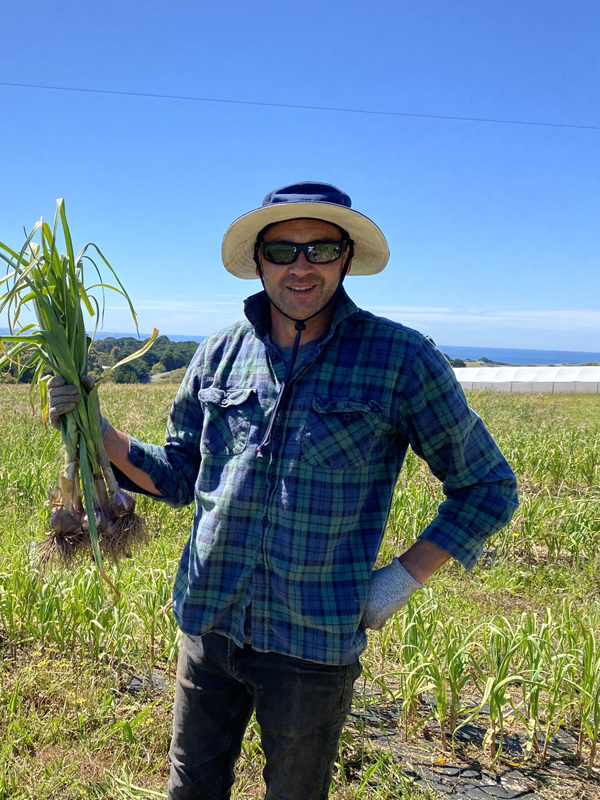
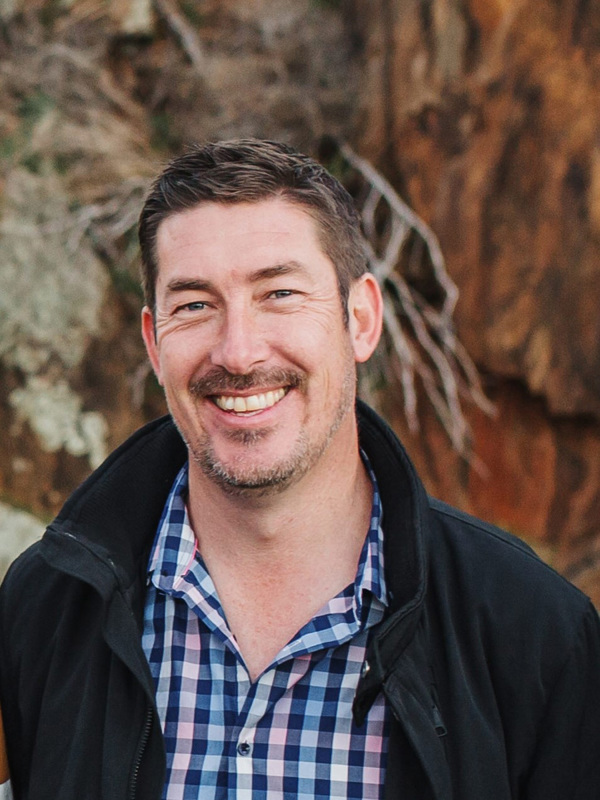
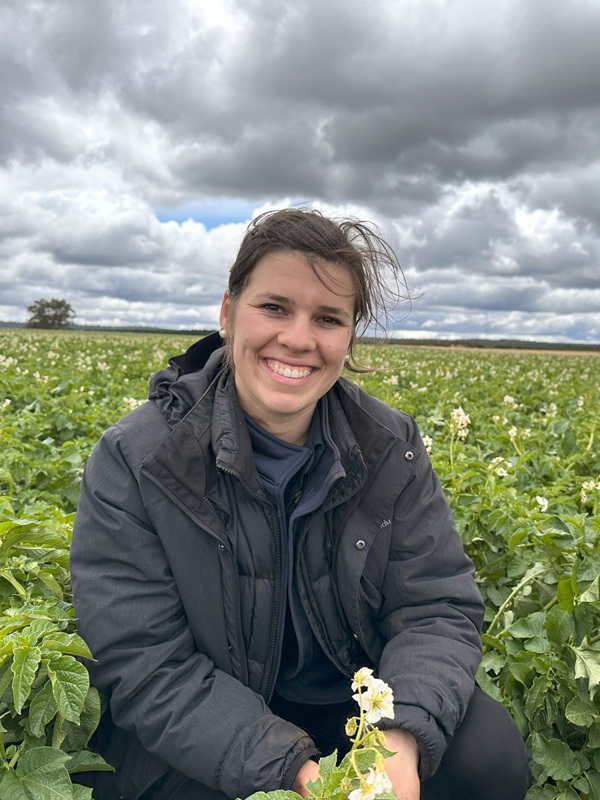
David Roberts-Thomson

Colostrum for Crops: Why a Tasmanian Farmer Wants Every Seed to Start Life with a Microbial Head Start
No livestock producer would let a newborn calf miss out on colostrum.
Yet in cropping, argues Tasmanian farmer David Roberts-Thomson, we have largely overlooked the biological partnerships plants evolved to survive and our modern methods often disrupt them.
The result is a reliance on volatile synthetic inputs and what he calls a “merry-go-round of costly interventions”. His Nuffield report sets out a practical way off it.
David farms with his family at Table Cape in North West Tasmania, where their business, Van Diemen Quality Bulbs, runs general cropping, wholesale flower bulb production, and direct sales and tourism.
He co-founded Soil First Tasmania, a farmer-led group exploring how a focus on soil can lift resilience and profit.
His Scholarship took him to farms, researchers and businesses in countries including Brazil, Chile, France, the Netherlands, the UK and the USA.
He wanted to find out how growers are biologically priming soil: deliberately kickstarting the relationship between plants and microbes at germination.
“I became curious and frustrated that I didn’t quite have the knowledge about how to successfully transition a farm over to a regenerative system,” David says. “There also seemed to be a scattering of ideas but no principles or structure to take the next step past good soil practice.”
His report explains how plants actively farm microbes at their root tips and why the first two weeks of a seedling’s life are critical.
Priming puts beneficial microbes on the seed or in-furrow, so they are there the moment a root emerges.
The payoff is economic as well as agronomic. “Instead of buying 100% of your fertility in a bag, you are ‘hiring’ biology to unlock the fertility already bound in your soil or out of the atmosphere,” David says.
He also links microbially active soil to more nutrient-dense food, pointing to an analysis of USDA data showing up to a 38% reduction in certain nutrients since 1950.
The proof is already in the paddock overseas.
In Brazil, SLC Group and Scheffer, farming over 500,000 ha and 250,000 ha respectively, brew their own microbes in on-farm biological factories, with Scheffer isolating over 500 unique strains.
In the UK, vegetable grower G’s Fresh cut ploughing by 75%, lifted living plant cover from 61% to 81% of the year and reintroduced 4,000 sheep.
It then added Johnson-Su compost extract, including on its lettuce and celery transplant plugs. The business has seen marked increases in marketable yield, shelf life extended by several days, and more profit.
David is clear that priming is not a silver bullet.
Biology needs a ‘house’ and ‘food’, so compaction, salts and poor soil chemistry must be fixed first. “You can’t build biology on a foundation of salt,” he says.
His advice to farmers is to audit their soil constraints, then trial seed or in-furrow primers, especially from high-quality compost such as Johnson-Su or vermicompost.
He also calls on industry and research to validate priming through farmer groups, screen Australia’s own native microbes and look to Brazil’s model of scale through farmer-owned companies or co-operatives.
And Australia needs a national Soil Health Framework to give extension and research a common language.
“The future of Australian agriculture is not more synthetic inputs but an increased understanding and management of our biology,” David says.
Investor Information:
The Tasmanian Institute of Agriculture (TIA) is a research institute at the University of Tasmania specialising in research, development, extension and education to support prosperous, innovative and sustainable agriculture and food sectors in Tasmania. TIA began in 1997 as a joint venture between the University of Tasmania and the Tasmanian Government, bringing together the human and physical resources of the Tasmanian Government with the scientific research and teaching capacity of the University of Tasmania.
Website: https://www.utas.edu.au/tia/about Facebook: @TasInAg
The JM Roberts Charitable Trust was established in 2003 by the late John Roberts with a goal to provide additional funding to support and promote the well-being of our natural environment today and for generations to come.Specifically, the Trust has a focus in the areas of reducing land and soil degradation, clean waterways, re-vegetation, managing erosion and informing and educating the community and youth on the importance of land care.
Website: http://jmroberts.org/